Last updated: September 2026 · Reviewed by Miguel Cibeira
This article is for informational purposes only and is not insurance advice. Cancellation procedures, refund policies, and notice requirements vary by provider and by state — always confirm current terms directly with your insurer before canceling.
Most pet insurance policies can be canceled at any time. What actually determines whether you get any money back — and whether canceling causes you a problem later — comes down to timing. Here’s how that plays out across three moments: before you cancel, the act of canceling itself, and what happens afterward if you ever want coverage again.

Before You Cancel: The 30-Day Window That Changes Everything
Nearly every U.S. state requires insurers to offer a free-look period — typically 30 days from your policy’s effective date — during which you can cancel and receive a full premium refund, no questions asked. This consumer protection is built into the pet insurance industry’s own standards and is echoed in the NAIC Pet Insurance Model Act, a regulatory framework several states have adopted or referenced when writing their own pet insurance rules. Most major insurers — including Embrace, MetLife Pet, Lemonade, Healthy Paws, Trupanion, and Pets Best — offer the full 30-day window even in states where a shorter period would technically satisfy the legal minimum.
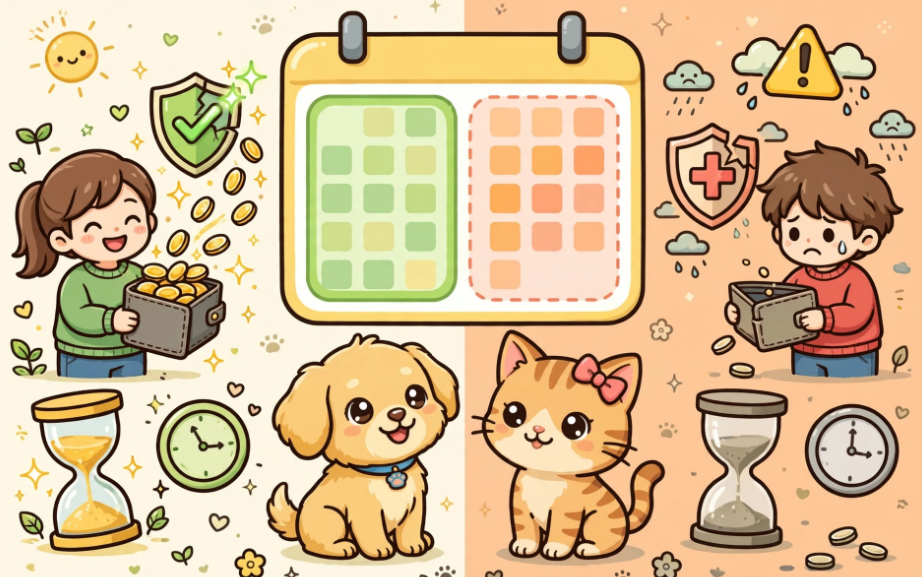
There’s a catch worth knowing before you test out a policy: filing a claim during the free-look period generally forfeits your right to a full refund at most insurers, since submitting a claim signals you’ve already begun using the policy. If you’re using this window specifically to evaluate whether a policy is right for you, holding off on any claims until you’ve decided to keep it preserves your refund option — though your pet’s actual medical needs should always come first if care is genuinely necessary.
Once you’re past day 30, the refund math changes. Most states require a pro-rata refund — the exact unused portion of your premium for the remaining days in your billing period, no penalty attached. A smaller number of insurers, where state law permits, use a short-rate refund instead, withholding roughly 10-15% of the unused premium as a penalty. And if you’ve already filed and been paid for claims during the policy period, expect your refund to shrink accordingly, or disappear entirely — insurers generally don’t refund premium for coverage you’ve actively used.
The Act of Canceling: Why the Method Matters
Every insurer has its own required cancellation channel, and using the wrong one can leave you still being charged after you thought you’d canceled. MetLife Pet requires a phone call. Trupanion and Figo require written notice — an email or form won’t be accepted as a phone request, and vice versa. Many providers now also offer online self-service cancellation through your account portal, generally the fastest route with instant confirmation.

Whatever method your provider requires, three habits protect you: confirm the exact requirement in your policy documents before starting, request written confirmation of the cancellation (including the effective date and any refund amount) even if you canceled by phone, and check your next billing statement to make sure no further premium was charged.
If your real goal is a lower bill rather than no coverage at all, it’s worth pausing before you cancel entirely. Raising your deductible or lowering your reimbursement rate — the same two levers covered in our guide on how the deductible works — reduces your premium while keeping the policy active, which sidesteps the entire problem discussed next.
After You Cancel: What a Coverage Gap Actually Costs You
This is the part that’s easy to overlook in the moment. If you cancel and later decide to re-enroll — even with the exact same company — your waiting periods start over from zero, a mechanism covered in full in our guide on pet insurance waiting periods. Worse, any condition your pet was treated for or diagnosed with during the canceled policy period will likely be classified as pre-existing under the new policy, permanently excluded going forward — the same rule explained in our guide on pre-existing conditions. A gap in coverage doesn’t just pause protection; it can quietly convert something that would have been covered into something that never will be again.
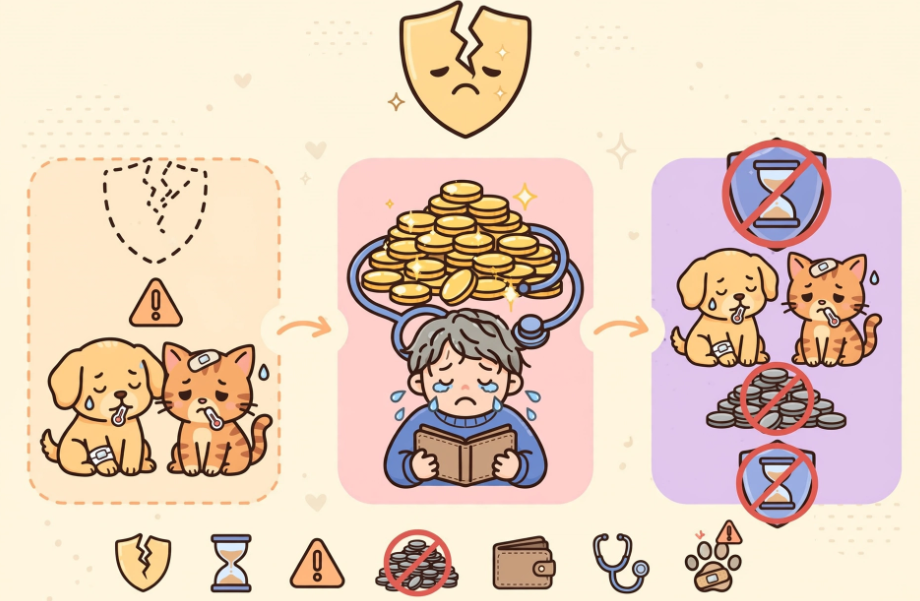
There’s also an age angle worth planning around. If your pet ages past a new insurer’s maximum enrollment threshold during the gap, you may find yourself unable to get new coverage at all, or stuck with a much narrower set of options — a risk covered in more depth in our guide on enrollment timing.
One more thing worth checking before you walk away: most policies auto-renew by default. If you’re canceling specifically to avoid an upcoming renewal charge, initiate the cancellation well before that renewal date — untangling a charge that’s already processed is a harder conversation than preventing it in the first place.
This article is provided for general informational and educational purposes only and does not constitute insurance advice. Free-look periods, refund calculation methods, and cancellation procedures referenced above vary by provider and by state and are subject to change — always verify current terms directly with your specific insurer and consult your state’s insurance department with questions about state-specific requirements. Read our full Legal Notice, Privacy Policy, and Cookie Policy for more information.
About the Author
Miguel Ángel Cibeira researches and writes every article on The Vet Bill personally, sourcing information directly from insurance providers, NAPHIA (the North American Pet Health Insurance Association), and other verifiable industry sources. He is not a licensed insurance agent, broker, or carrier — this site offers independent research and general information, not personalized insurance advice. Read the full bio →